
That Frustrating Reverse: What's Really Going On
You press the button on your garage door remote, watch the door start its descent, and then — right before it touches the ground — it stops and goes back up. You try again. Same thing. Maybe you try holding the wall button down, and it finally closes, but the moment you let go, it reverses again.
This is one of the most common garage door complaints we hear from homeowners in Oceanside, and the good news is that it's almost always fixable. The bad news? Ignoring it can leave your garage wide open to weather, pests, and security risks. Let's walk through the most likely causes and what you can do about each one.
Understanding Your Garage Door's Safety System
Before we get into troubleshooting, it helps to understand why your garage door is designed to reverse in the first place. Every modern garage door opener manufactured after 1993 is required by federal law to include two safety mechanisms:
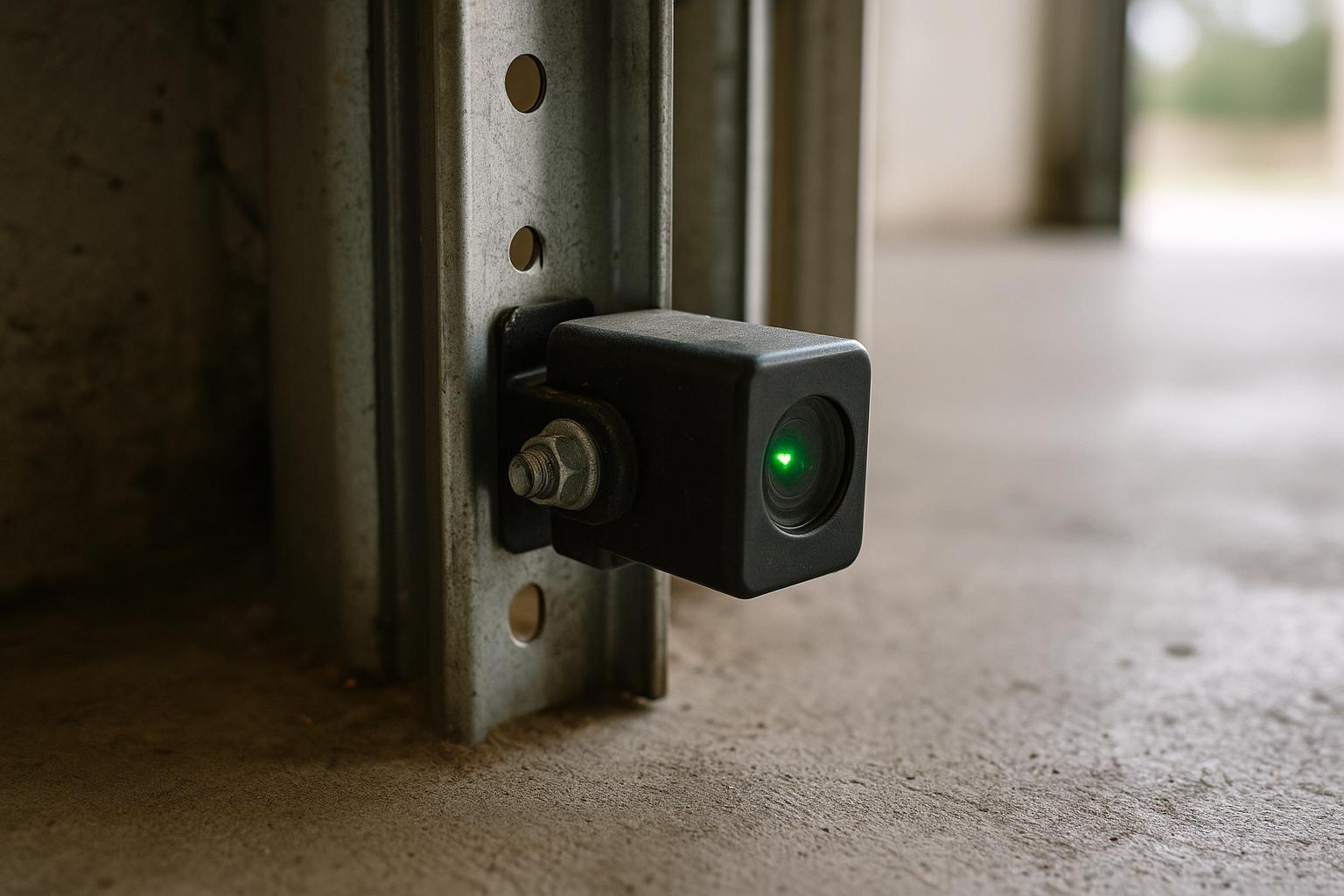
- Photo-eye sensors: Two small sensors mounted near the bottom of the door tracks on either side. They project an invisible beam across the opening. If anything breaks that beam while the door is closing, the door reverses.
- Auto-reverse mechanism: If the door encounters physical resistance while closing — like hitting an object or the ground too hard — it reverses direction to prevent injury or damage.
Both of these features exist to protect people, pets, and property. So when your door reverses unexpectedly, it's usually because one of these systems thinks something is wrong — even if nothing actually is.
Cause #1: Misaligned Photo-Eye Sensors
This is the number one reason garage doors reverse before reaching the floor. The photo-eye sensors on either side of your garage door opening need to be perfectly aligned to maintain their infrared beam. If one sensor gets bumped, shifted, or knocked out of position, the beam is broken and the opener interprets that as an obstruction.
How to Check
Look at the small LED lights on each sensor. On most models, both lights should be solid — one green and one amber (or both green, depending on the brand). If one light is blinking, that sensor is likely out of alignment.
What You Can Do
Gently adjust the sensor that's blinking until the light becomes steady. The mounting brackets sometimes loosen over time, especially in garages where bikes, trash cans, or tools are stored near the tracks. Tighten the wing nut or bracket screw once the light is solid again.
Cause #2: Dirty or Obstructed Sensors
Living near the coast in Oceanside means dealing with salt air, dust, and moisture — all of which can coat your photo-eye sensor lenses over time. Even a thin layer of grime can weaken the infrared beam enough to cause intermittent reversing.
The Fix
Wipe each sensor lens gently with a soft cloth. Avoid using harsh chemicals. Also check for cobwebs, leaves, or any debris that might be partially blocking the sensor's line of sight. This simple cleaning solves the problem more often than you'd expect.
Cause #3: Incorrect Close-Force or Travel Limit Settings
Your garage door opener has adjustable settings that control how far the door travels and how much force it uses to close. If the close-limit setting is off, the opener may think the door has hit the ground (or an obstruction) before it actually has, triggering the auto-reverse.
How This Happens
These settings can drift over time, especially after a spring replacement, track adjustment, or even seasonal temperature changes that cause metal components to expand and contract. If you recently had any work done on your garage door or if the weather has shifted dramatically, this could be your culprit.
Adjusting the Settings
Most openers have two small dials or screws on the back or side of the motor unit — one for travel limits and one for force. Consult your owner's manual for specific instructions. Small adjustments go a long way; turn the close-limit dial a quarter turn at a time and test the door after each adjustment. If you're not comfortable making these changes yourself, this is a quick fix for a professional technician.
Cause #4: Worn or Damaged Rollers and Tracks
If your garage door rollers are worn, cracked, or caked with debris, the door won't glide smoothly along the tracks. This added friction can create enough resistance that the opener's auto-reverse kicks in, thinking the door has hit something.
Similarly, bent or misaligned tracks can cause the door to bind at certain points during its travel. You might notice the door hesitates or makes grinding noises at a specific spot before reversing.
What to Look For
- Rollers that appear cracked, chipped, or don't spin freely
- Visible bends or dents in the metal tracks
- Gaps between the rollers and the track
- Grinding, scraping, or popping sounds during operation
Roller replacement and track realignment are best handled by a professional, since the door needs to be properly supported during the repair.
Cause #5: Broken or Weakening Springs
Your garage door springs do the heavy lifting — literally. They counterbalance the weight of the door so the opener only has to provide a small amount of force to move it. When springs weaken or break, the full weight of the door bears down on the opener, and the increased resistance can trigger the auto-reverse.
If your door feels noticeably heavier when you try to lift it manually, or if you heard a loud bang from the garage recently, a broken spring is likely the issue. Spring replacement is dangerous and should always be performed by a trained technician. The tension stored in these springs can cause serious injury if handled improperly.
Cause #6: Wiring Problems
Less common but still worth mentioning: damaged or frayed wiring between the opener and the sensors can send intermittent signals that confuse the system. Rodents, moisture, and general wear can all degrade wiring over time. If you've ruled out the other causes on this list and the problem persists, a wiring inspection may be in order.
When to Call a Professional
Some of these fixes — cleaning sensors, checking alignment, minor limit adjustments — are safe for most homeowners to handle. But if you're dealing with spring issues, track damage, or electrical problems, it's time to call in a pro.
At Oceanside Garage Door Service, we diagnose reversing problems quickly and explain exactly what's going on before we start any work. There's no guessing and no unnecessary upselling — just honest answers and reliable repairs. We serve homeowners throughout Oceanside, Carlsbad, Vista, San Marcos, Encinitas, and Escondido, and we're committed to getting your door working safely and reliably.
Don't Leave Your Garage Wide Open
A garage door that won't stay closed isn't just annoying — it's a security risk and an invitation for weather damage and unwanted critters. If you've tried the basic troubleshooting steps above and your door is still reversing, give us a call. We'll get to the bottom of it and have your door closing properly again, usually in a single visit.