
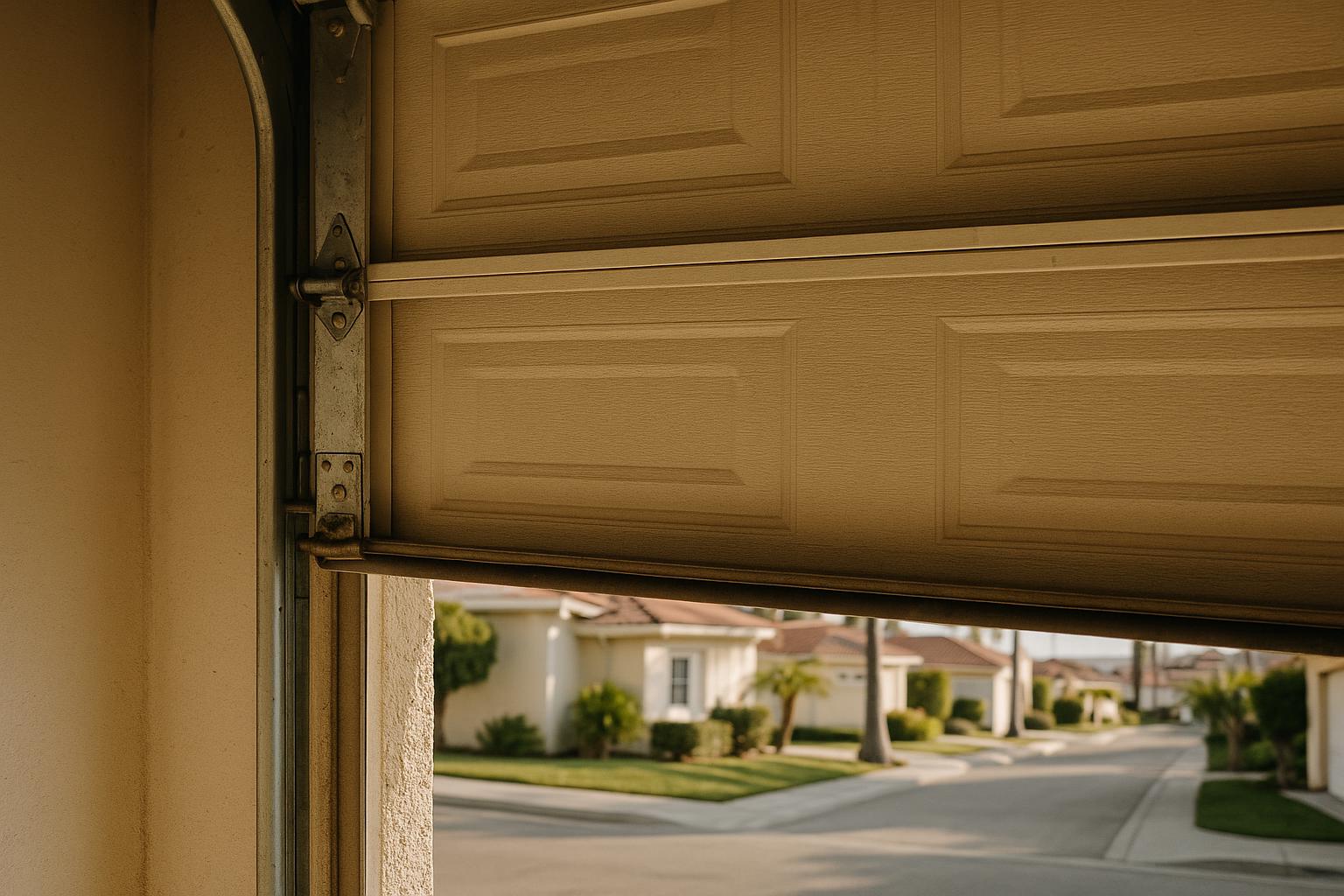
Your Garage Door Shouldn't Sound Like That
You press the button, and instead of a smooth, quiet glide, your garage door groans, screeches, or rattles its way up the track. Maybe you've gotten so used to it that you barely notice anymore. Or maybe it's a new sound that appeared out of nowhere and has you wondering if the whole system is about to fall apart.
Either way, a noisy garage door is more than just an annoyance — it's often an early warning sign that something needs attention. Ignoring those sounds can lead to bigger, more expensive problems down the road. Here in Oceanside, where many of us use our garages multiple times a day, wear and tear adds up fast.
Let's break down the most common garage door noises, what's causing them, and what you should do about each one.
Grinding or Scraping Sounds
A grinding or scraping noise usually points to a problem with the tracks or rollers. Over time, metal rollers can wear down, develop flat spots, or lose their lubrication. When that happens, they don't roll smoothly — they drag and grind against the track.
Another possibility is that the tracks themselves have become misaligned. Even a small shift can cause the door to scrape against the metal rails as it moves up and down. You might also notice the door hesitating or getting stuck at certain points along the track.
What to Do
- Visually inspect the rollers for visible wear, cracks, or flat spots.
- Check the tracks for gaps, bends, or debris that could be causing friction.
- If the rollers are metal, upgrading to nylon rollers can dramatically reduce noise.
- Call a professional if the tracks appear bent or misaligned — attempting to adjust them yourself can be dangerous.
Squealing or Squeaking
High-pitched squealing is one of the most common garage door complaints, and it's usually the easiest to address. In most cases, it comes down to a lack of lubrication. The moving parts of your garage door system — hinges, rollers, springs, and bearings — need periodic lubrication to operate quietly and efficiently.
Oceanside's coastal air can accelerate corrosion on metal components, which makes regular maintenance even more important for homeowners in our area. Salt air and moisture work against bare metal, causing rust and stiffness that leads to those irritating squeaks.
What to Do
- Apply a garage door-specific lubricant (not WD-40, which is a solvent, not a long-term lubricant) to the hinges, rollers, springs, and bearing plates.
- Lubricate the track sparingly — too much can attract dirt and grime.
- Make lubrication part of a regular maintenance routine, ideally every six months.
Rattling and Vibrating
If your garage door sounds like it's shaking itself apart, the culprit is usually loose hardware. Every time your door cycles open and closed, vibrations gradually loosen nuts, bolts, and screws throughout the system. Over months and years, those small movements add up.
Rattling can also come from a loose chain on a chain-drive opener. If the chain has too much slack, it slaps against the rail and creates a rhythmic rattling noise during operation.
What to Do
- Use a socket wrench to tighten all the bolts and nuts on the door's brackets, hinges, and track mounts.
- Check the opener's chain tension and adjust it according to the manufacturer's guidelines.
- Inspect the door's mounting hardware where it connects to the wall and ceiling — loose lag bolts can amplify vibrations throughout the garage.
Banging or Popping Sounds
A loud bang or pop when the door starts moving is more concerning. This often indicates a problem with the torsion springs. As springs age and lose tension, they can bind or slip, releasing energy in a sudden pop. In some cases, the banging comes from panels flexing because they're not properly supported or because a hinge has broken.
A single loud bang followed by the door refusing to move could mean a spring has actually broken. This is a serious situation that requires immediate professional repair — torsion springs are under extreme tension and can cause severe injury if handled incorrectly.
What to Do
- Do not attempt to repair or adjust torsion springs yourself.
- If you hear a sudden loud bang and the door stops working, look for a gap in the spring above the door. A visible gap confirms a break.
- Call a garage door technician to inspect and replace the springs safely.
Humming or Buzzing from the Opener
If you hear the motor humming or buzzing but the door doesn't move, the opener is trying to work but something is preventing it. This could be a stripped gear inside the opener, a disconnected drive mechanism, or the door itself being stuck due to a broken spring or jammed track.
Sometimes the issue is simpler than you'd expect — the manual release cord may have been pulled, disengaging the opener from the door. This happens more often than people realize, especially after a power outage when someone manually opened the door and forgot to re-engage the trolley.
What to Do
- Check whether the manual release has been activated and re-engage it if needed.
- Listen carefully to the motor — a grinding sound inside the unit often means stripped gears that need replacement.
- If the motor runs but nothing moves, the problem likely requires professional diagnosis.
When Noise Means It's Time for a Tune-Up
Many of these issues can be prevented with regular garage door maintenance. A professional tune-up typically includes lubricating all moving parts, tightening hardware, inspecting springs and cables for wear, testing the door's balance, and checking the opener's safety features.
Think of it like an oil change for your car — a small investment now that prevents major breakdowns later. For Oceanside homeowners, we recommend scheduling a tune-up at least once a year, or twice a year if your garage door gets heavy daily use.
Don't Wait Until the Noise Becomes a Breakdown
Every strange sound your garage door makes is a clue. Some clues point to quick, inexpensive fixes. Others are early warnings of failures that could leave you stuck, damage your property, or even put your family at risk.
If your garage door has started making noises that weren't there before — or if the sounds have been getting progressively louder — it's worth having a professional take a look. At Oceanside Garage Door Service, we diagnose the problem, explain your options honestly, and fix things right the first time. No guesswork, no upselling, just straightforward service from a team that knows garage doors inside and out.
Give us a call or schedule an appointment online. We serve homeowners and businesses throughout Oceanside, Carlsbad, Vista, San Marcos, Encinitas, and Escondido — and we'll make sure your garage door runs the way it should: quietly.