
Your Garage Door Springs Are Working Harder Than You Think
Every time you open or close your garage door, the springs do the heavy lifting — literally. A standard two-car garage door can weigh between 150 and 250 pounds, and the springs are responsible for counterbalancing all of that weight. Your garage door opener doesn't actually lift the door; the springs do. The opener just provides the motorized push to get things moving.
Most garage door springs are rated for about 10,000 cycles. One cycle equals one open and one close. If you use your garage door four times a day, that's roughly seven years of life. For families in Oceanside who use the garage as their primary entrance — which is extremely common — that number can shrink even faster.
The good news is that springs rarely break without warning. There are almost always signs that failure is coming. Knowing what to look for can save you from a broken spring at the worst possible moment, like when you're trying to get to work on a Monday morning.
Warning Sign #1: The Door Feels Heavier Than Usual
If you disconnect your garage door from the opener and try to lift it manually, it should feel relatively light and easy to move. A properly balanced door will stay in place when you lift it halfway and let go.
If the door feels noticeably heavy, drops when you release it, or your opener seems to be straining more than usual, your springs are losing tension. This is one of the earliest and most reliable signs that replacement is needed.
How to Test Your Door's Balance
- Pull the emergency release cord to disconnect the opener.
- Manually lift the door to about waist height.
- Let go carefully. The door should stay in place or drift only slightly.
- If it crashes down or feels extremely heavy, your springs are weakening.
Important: Never attempt to adjust or replace garage door springs yourself. They are under extreme tension and can cause serious injury. This test is safe because you're only lifting the door — not touching the springs.
Warning Sign #2: You Hear Loud Squeaking or Grinding
Some noise during operation is normal, especially in the morning when metal components are cold. But if you're hearing loud squeaking, popping, or grinding sounds that weren't there before, it could mean the spring coils are rubbing against each other unevenly due to wear or corrosion.
Oceanside's coastal climate plays a role here. The salt air and humidity along the coast can accelerate rust and corrosion on metal springs, shortening their lifespan compared to doors in drier inland areas like Escondido or San Marcos. If your home is within a few miles of the beach, your springs may wear out faster than average.
Warning Sign #3: Visible Gaps in the Spring Coils
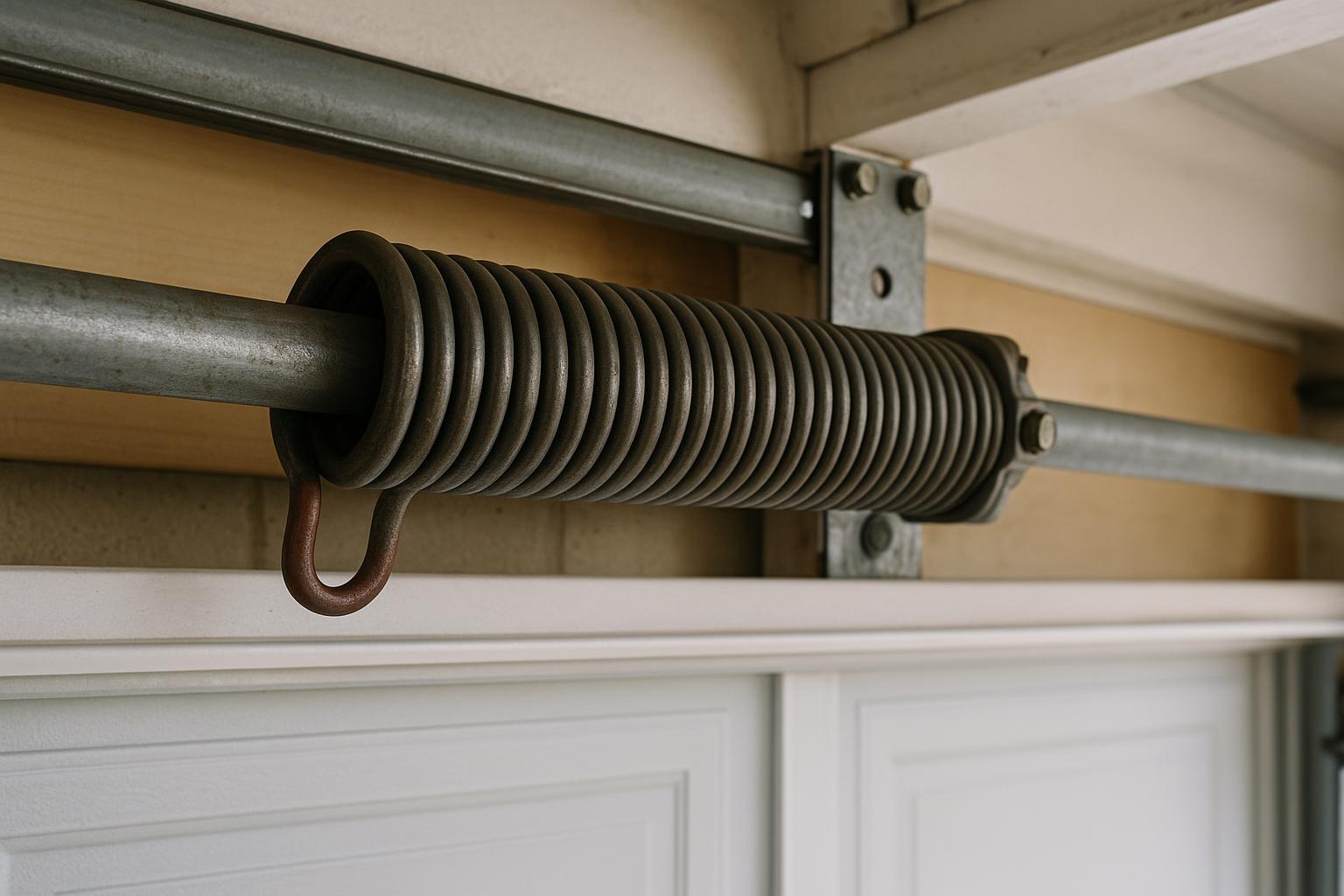
Take a look at the torsion spring mounted above your garage door. When a spring is in good condition, the coils are tightly wound with no visible gaps between them. As the spring weakens and nears the end of its life, you may notice gaps forming between the coils — the spring is literally stretching out.
If you see a clear separation or gap in the coils, replacement should be scheduled soon. Once those gaps appear, a full break is usually not far behind.
Warning Sign #4: The Door Opens Unevenly or Crooked
If your garage door tilts to one side when opening, or one side rises faster than the other, it could mean one of your extension springs (the springs on either side of the door) has weakened more than the other. This uneven tension puts extra stress on your tracks, cables, and opener, which can lead to additional damage if left unaddressed.
A crooked door is also a safety concern. It can come off the tracks entirely, which creates a dangerous situation for anyone standing nearby.
Warning Sign #5: The Door Slams Shut Quickly
A garage door with healthy springs closes in a slow, controlled manner. If your door drops quickly or slams the last foot or two, the springs aren't providing enough counterbalance to manage the door's weight on the way down. This is hard on the door panels, the bottom seal, and your garage floor. More importantly, a fast-closing door is a safety hazard for children, pets, and anyone walking through.
Warning Sign #6: Rust and Corrosion on the Springs
Rust weakens the metal and increases friction between the coils, which accelerates wear. As we mentioned, this is especially relevant for homeowners in Oceanside and nearby Carlsbad and Encinitas, where ocean moisture is a constant factor.
Regular lubrication with a silicone-based garage door spray can slow down corrosion, but it won't stop it entirely. If your springs are visibly rusted and you've had them for several years, it's worth having a professional inspect them to assess how much life they have left.
What Happens When a Spring Actually Breaks?
When a garage door spring breaks, you'll usually know immediately. Most homeowners describe it as a loud bang that sounds like a gunshot or a car backfiring. It often happens when the door is closed and no one is operating it — temperature changes can be the final trigger.
Once a spring breaks:
- The door will be extremely heavy and difficult or impossible to open manually.
- Your opener will struggle or fail to lift the door.
- The door may open a few inches and then stop.
- You may see the broken spring hanging in two pieces above the door.
A broken spring doesn't just mean inconvenience — it means your car could be trapped in the garage. That's why catching the warning signs early and scheduling a replacement on your terms is always better than dealing with an emergency.
How Often Should Springs Be Inspected?
We recommend having your garage door professionally inspected at least once a year. During a maintenance visit, a technician will check spring tension, lubricate moving parts, inspect cables and hardware, and test the door's balance. This kind of preventive care can extend the life of your springs and help you avoid unexpected breakdowns.
If your springs are more than seven years old, or if you've noticed any of the warning signs above, don't wait for the annual checkup. Give us a call and we'll come take a look.
Stay Ahead of the Problem
Garage door springs are one of those components that are easy to ignore until they fail. But paying attention to the signs — a heavy door, unusual noises, visible gaps, uneven movement, or rust — can help you avoid a stressful and potentially dangerous situation.
At Oceanside Garage Door Service, we handle spring replacements across Oceanside, Vista, Carlsbad, and the surrounding communities every day. We'll assess your springs honestly, tell you exactly what's going on, and get them replaced quickly so your door works the way it should. If something doesn't look right with your garage door, reach out to us. We'd rather help you prevent a problem than fix one after it's already caused damage.